Espresso Ratio Guide: Dose, Yield and Time Explained
The espresso brew ratio in plain English: what 1:2 means, why you weigh instead of measure, how ristretto and lungo differ, and exactly what to change when a shot tastes sour or bitter.
We earn a commission if you buy through our links, at no extra cost to you. How we make money
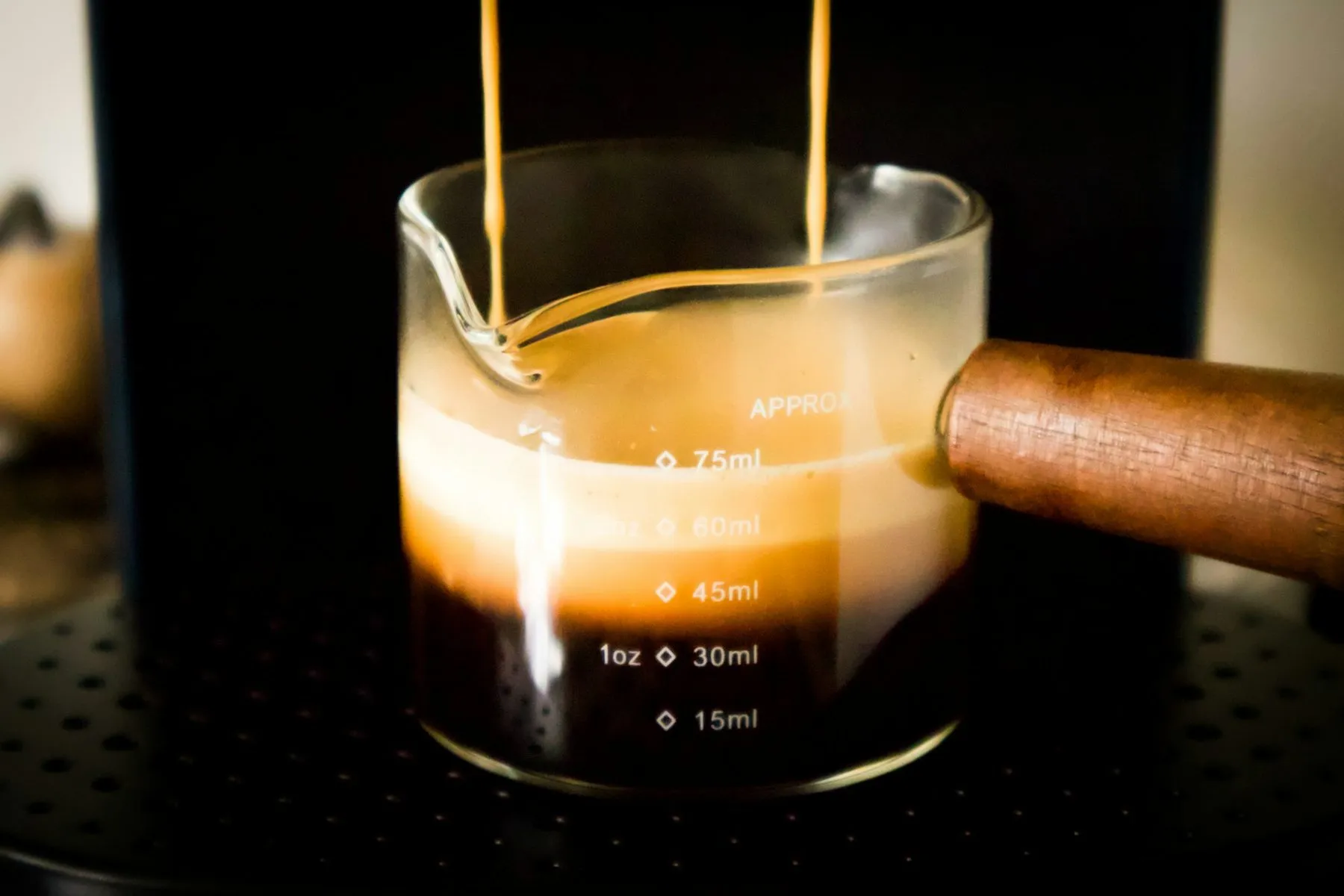
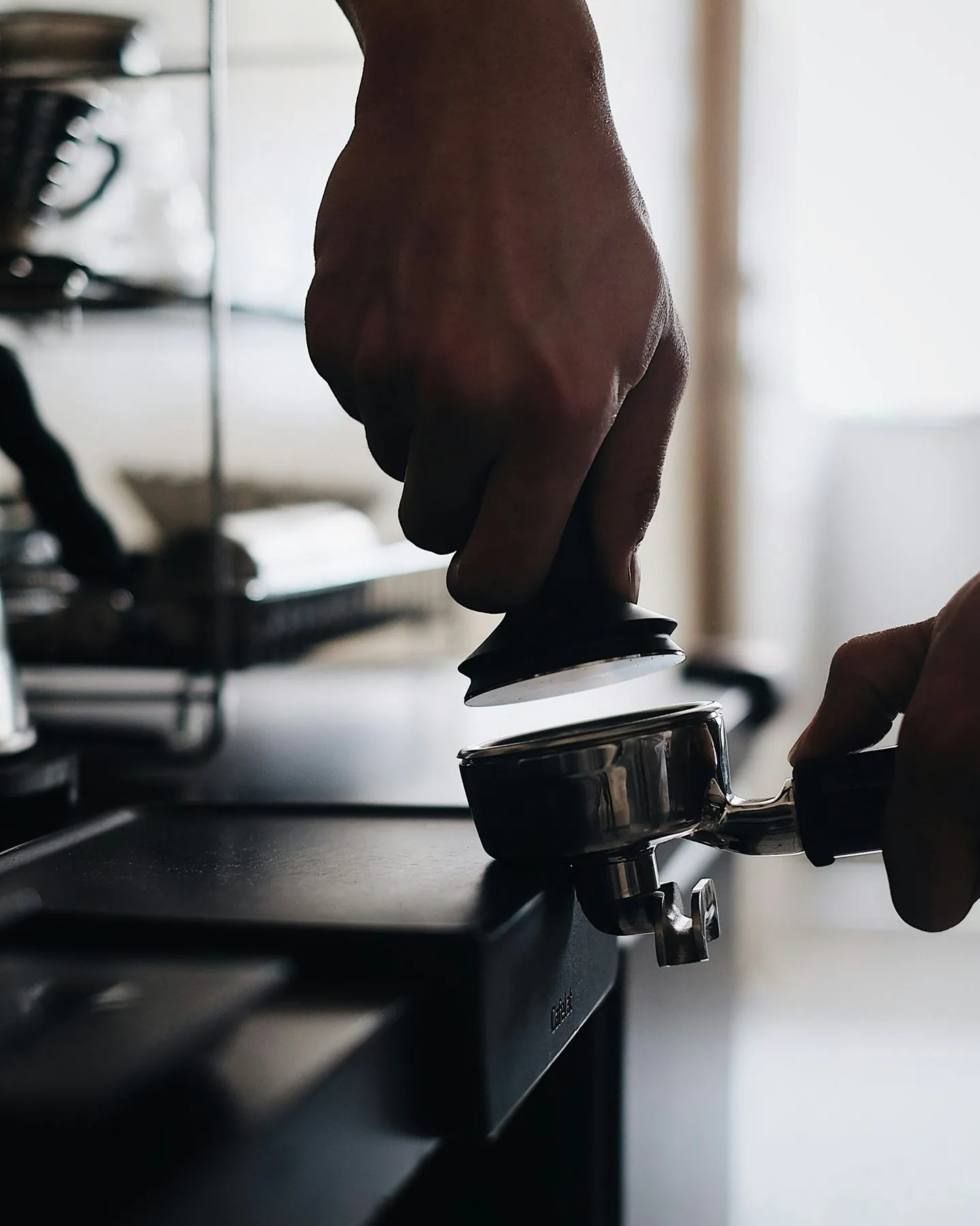
Photo: User_Pascal on Unsplash
Espresso recipes look intimidating until you notice they’re only three numbers: how much coffee goes in, how much espresso comes out, and how long that takes. Get those under control and most “bad espresso” problems turn into one obvious fix.
The three numbers
Dose is the weight of ground coffee in the basket. Most double baskets are designed for somewhere between 16 and 20 g, and many have the number stamped on them. Start with what the basket says, often 18 g.
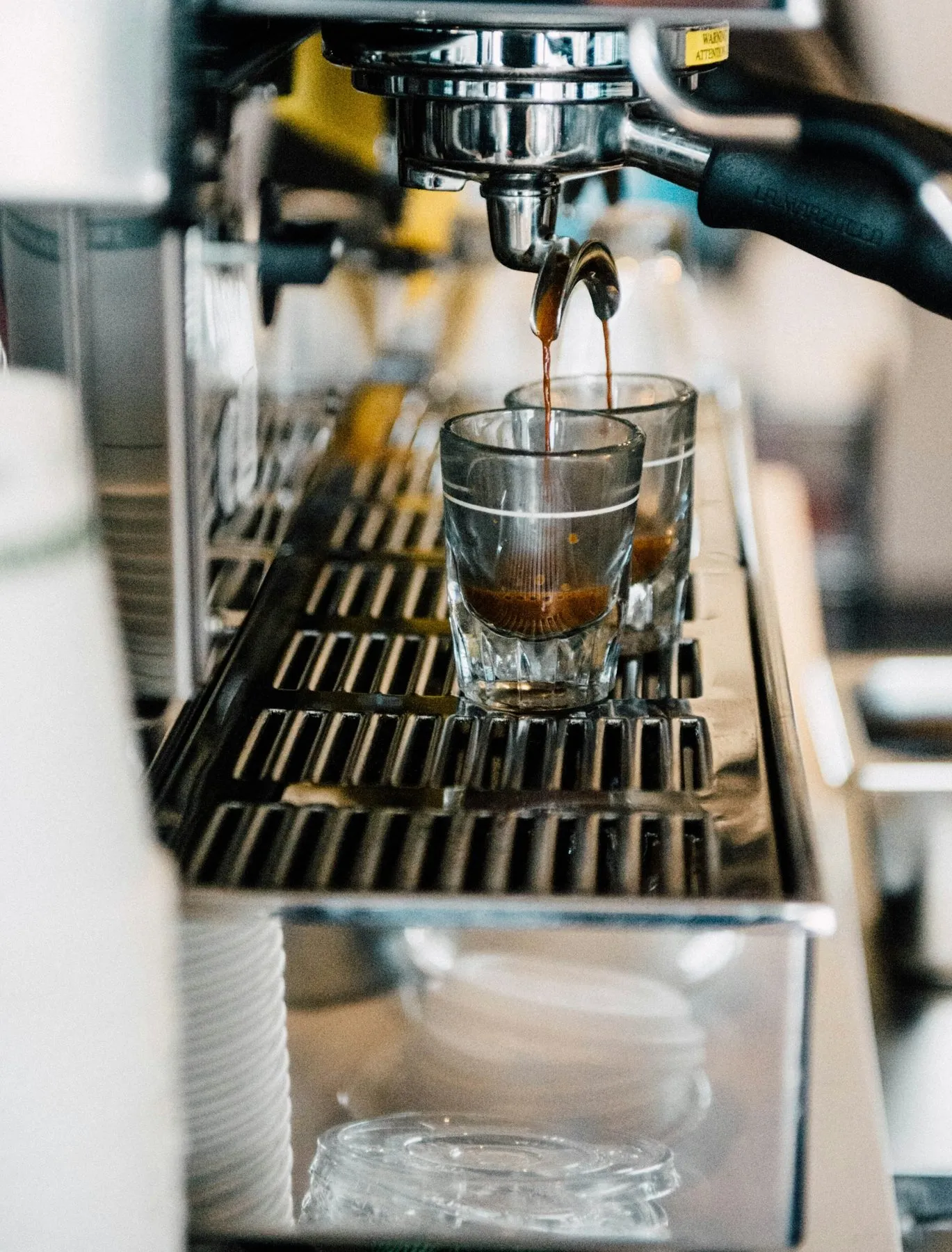
Yield is the weight of liquid espresso in the cup. Weigh it. Don’t use the lines on a shot glass; crema can make a shot look twice its real size.
Time is how long the shot runs, from pressing the button to stopping it. It’s the easiest number to read and the least important on its own.
The ratio is just yield divided by dose. 18 g in and 36 g out is 1:2.
Starting recipe
18 g in, 36 g out, 25 to 30 seconds. Every dial-in starts here. The ratio calculator works it out for any dose.
Common ratios
| Ristretto | Normale | Lungo | |
|---|---|---|---|
| Ratio | About 1:1 to 1:1.5 | 1:2 | About 1:3 |
| 18 g dose gives | 18–27 g | 36 g | 54 g |
| Tastes | Thick, intense, sweeter | Balanced, the default | Lighter, more bitter edge |
| Often suits | Dark roasts, milk drinks | Most coffees | Light roasts, some people |
None of these is “correct.” They’re starting points. Light roasts often taste better pulled longer, around 1:2.5. Dark roasts often taste better shorter.
How to dial in, one change at a time
- Fix the dose. Pick a number, usually what your basket says, and leave it alone.
- Fix the ratio. Start at 1:2.
- Adjust the grind until the time lands. Too fast, grind finer. Too slow, grind coarser.
- Taste. Now adjust the ratio, not the grind, to fine-tune flavor.
The rule that saves the most frustration: change one thing at a time. Change grind and dose together and you’ll never know which one fixed it.
What the taste is telling you
Sour, thin, salty: under-extracted. Grind finer, or pull a longer ratio.
Bitter, dry, harsh: over-extracted. Grind coarser, or pull a shorter ratio.
Sour and bitter at once: usually uneven extraction, called channeling. Break up clumps before tamping (a cheap needle tool helps a lot), tamp level, and make sure the puck isn’t cracked.
Weak and watery but time looks right: check you’re using the single-wall basket, not the pressurized one, and that the coffee was roasted in the last few weeks.
When the grinder is the problem
If you’re at the grinder’s finest setting and shots still run in 15 seconds, it isn’t your technique. Many all-purpose grinders can’t go fine enough for espresso, or their steps are too coarse to land the shot. That’s the single most common reason beginners give up. See espresso grinders under $300 for ones that can.
What you need
- A scale with 0.1 g resolution that fits on the drip tray.
- A grinder capable of espresso.
- Fresh coffee, ideally roasted within the last month.
- A machine with single-wall baskets. Any of the machines under $500 qualifies.
Bottom line
Weigh the dose, weigh the yield, and only move the grinder until the time is right. Then let taste pick the ratio. That’s 90 percent of espresso.
Questions people ask
What does a 1:2 espresso ratio mean?
For every gram of ground coffee in the basket, you get two grams of liquid espresso in the cup. 18 g in, 36 g out.
How long should an espresso shot take?
Around 25 to 30 seconds for a 1:2 shot is a good target, timed from when you start the pump. Treat time as a guide; taste decides.
Do I need a scale for espresso?
It's the most useful accessory you can buy. Volume is misleading because of crema, and a scale with 0.1 g resolution makes every adjustment repeatable.