How to Steam Milk for Latte Art at Home (Without Making Bubble Bath)
Step-by-step milk steaming on a home espresso machine: the stretch, the roll, the right temperature, which milks work best, and how to fix big bubbles, screaming and flat milk.
We earn a commission if you buy through our links, at no extra cost to you. How we make money

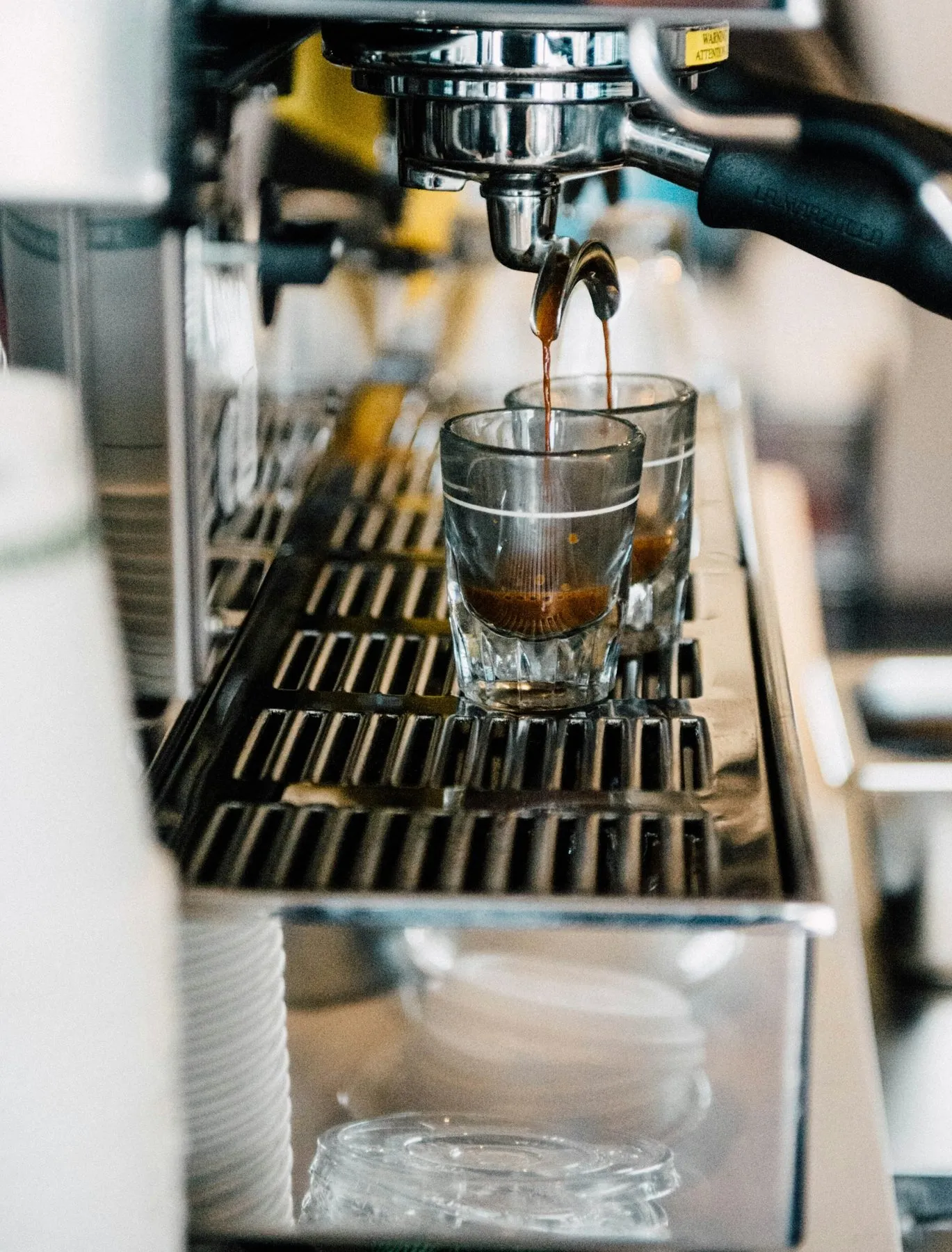
Photo: Louis Hansel on Unsplash
Good milk for a latte isn’t foam on top of hot milk. It’s one smooth, glossy liquid with tiny bubbles all the way through, the texture of wet paint. Getting there is a short sequence of two moves, and almost every problem comes from doing one of them for too long.
This works on any machine with a manual steam wand: Gaggia Classic, Barista Express, Bambino, Dedica, and anything else. If you have a Bambino Plus or Dedica Maestro Plus with automatic steaming, the machine does it for you; skip to the part about pouring.
What you need
- A steel milk jug. 350 ml (12 oz) is right for one or two drinks. The shape matters more than the brand; a pointed spout makes pouring art easier.
- Cold milk. Straight from the fridge. Cold milk gives you more time to texture before it gets too hot.
- A damp cloth for the wand.
Step by step
- Fill the jug to just below where the spout starts, roughly a third full. Milk expands as you steam.
- Purge the wand. Open the steam for a second into the drip tray or a cloth to clear water out of it.
- Position the tip just under the surface, slightly off-centre, with the jug tilted a little toward you.
- Stretch. Open the steam fully. You want a gentle tearing-paper sound as air is drawn in. Lower the jug slowly as the milk rises, keeping the tip just under the surface. Do this only until the jug feels lukewarm, a few seconds for a cappuccino’s worth of foam, even less for a flat white.
- Roll. Raise the jug so the tip sits a little deeper, and find the angle where the milk spins in a whirlpool. This breaks big bubbles into tiny ones and mixes the foam through. No more tearing sound now.
- Stop on temperature. When the jug gets too hot to keep your hand on comfortably, about 55–65°C (130–150°F), close the steam, then take the jug away.
- Wipe and purge the wand immediately. Dried milk is miserable to clean.
- Tap and swirl. Knock the jug on the counter once to pop any large bubbles, then swirl until the milk looks glossy. Pour straight away.
Use your hand as the thermometer
Keep your free hand flat on the side of the jug. When it’s warm, stop stretching. When it’s too hot to hold, stop steaming. It’s more reliable than a clip-on thermometer, which lags.

Pouring
Start pouring from a few inches above the cup, into the middle, so the milk dives under the crema. When the cup is about half full, bring the spout right down to the surface and tilt the cup toward you. That’s when white foam starts to appear on top, and where shapes come from. A heart is the easiest first pattern: pour into one spot until a white circle forms, then lift and draw straight through it.
Fixing common problems
Big, soapy bubbles: you stretched too long or the tip was too high. Shorten the stretch and roll longer.
Flat milk with no foam: the tip was too deep from the start, so no air got in. Start with it right at the surface.
Screeching: the tip is too deep or the jug is too empty. A little lower in the milk, or a bit more milk.
Foam on top, hot milk below: you didn’t roll enough. The whirlpool is what mixes it.
Weak steam that takes forever: normal on small machines. Some, like the Gaggia, need a moment after brewing for the boiler to reach steam temperature.
Which milk?
Cold whole dairy milk is the easiest to learn with, by a distance. Lower-fat milk foams readily but makes stiffer, drier foam. For plant milk, look for the “barista” versions of oat, soy or almond; they’re formulated to stretch and hold texture. Regular plant milks often split or go flat.
If you don’t want to learn this
That’s fair. Machines with automatic steam wands, like the Breville Bambino Plus and De’Longhi Dedica Maestro Plus, do a genuinely good job. See the best machines under $500.
Bottom line
Stretch briefly while it’s cool, roll until it’s hot, stop before it’s too hot. Then wipe the wand. That’s it; the rest is practice, and cheap milk.
Questions people ask
What temperature should steamed milk be?
Around 55–65°C (130–150°F). Stop when the jug becomes too hot to keep your hand on comfortably. Much hotter and the milk loses sweetness and texture.
Why does my milk have big bubbles?
The steam tip was too high or stayed at the surface too long. Stretch briefly, then sink the tip slightly to roll the milk and break bubbles down.
What milk is best for latte art?
Cold whole dairy milk is the easiest. For plant milk, use a barista edition, which is formulated to foam and hold texture.