Pressurized vs Unpressurized Espresso Baskets: Which Should You Use?
What dual-wall (pressurized) and single-wall (unpressurized) espresso baskets do, why one makes fake crema, when each makes sense, and single vs double baskets explained.
We earn a commission if you buy through our links, at no extra cost to you. How we make money
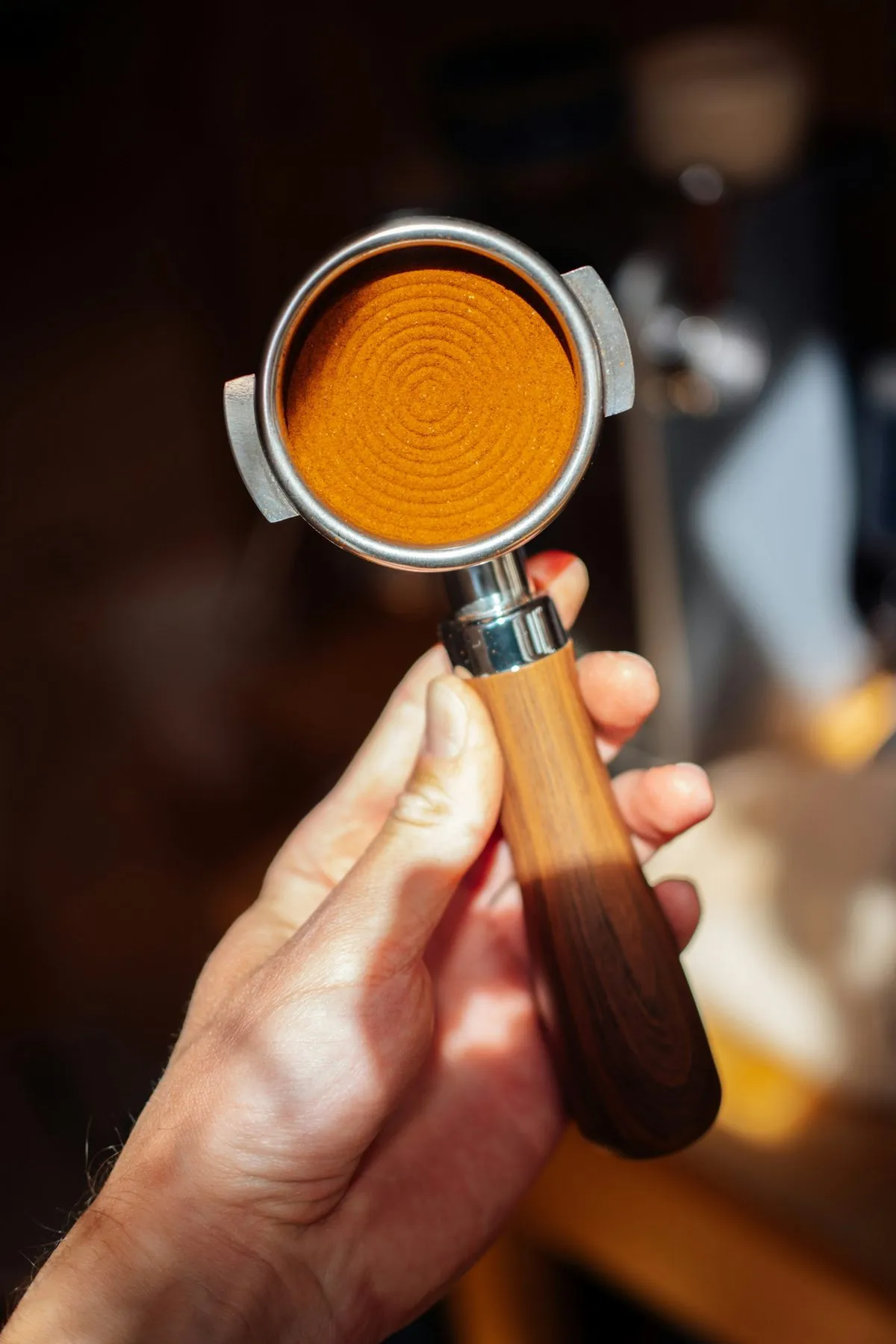
Photo: Raymond Petrik on Unsplash
Most home espresso machines come with two kinds of filter basket in the box, and they look almost identical from the top. Which one you use matters more than nearly anything else about your shot. Use the wrong one and your expensive grinder is wasted, or your shots taste like nothing.
The difference
Pressurized (also called dual-wall) baskets have a normal perforated inner wall, then a second wall underneath with just one small hole. The coffee has to squeeze through that pinhole, which builds pressure no matter how the coffee was ground.
Unpressurized (single-wall, sometimes called “commercial”) baskets have hundreds of fine holes across the bottom and nothing else. All the resistance has to come from the coffee itself, which means your grind and tamp actually matter.
| Pressurized (dual-wall) | Unpressurized (single-wall) | |
|---|---|---|
| How to spot it | One small hole underneath | Hundreds of tiny holes |
| Works with pre-ground coffee | Yes | Poorly |
| Needs a good grinder | No | Yes |
| Crema | Foamy, looks impressive | Real crema from fresh coffee |
| Flavor ceiling | Low | High |
When to use a pressurized basket
- You’re using pre-ground coffee, which is too coarse and too stale for a single-wall basket.
- You have a blade grinder or a grinder that can’t go fine enough for espresso.
- You want a forgiving, consistent result and don’t plan to dial in.
The foam it makes looks like crema but is mostly air whipped in by the pinhole. The drink is fine, often better than a pod machine, but it caps how good the coffee can get.
When to use an unpressurized basket
As soon as you have a burr grinder that can grind for espresso and fresh beans, switch. This is where flavor comes from: the grind controls the extraction, and you can adjust it until the shot tastes right. Every dial-in guide, including our ratio guide, assumes a single-wall basket.
Weak, watery shots with a good grinder?
Check you didn’t leave the pressurized basket in. It’s one of the most common beginner mix-ups, and it makes good beans taste flat.
Which machines include which?
Most machines in the under-$500 guide ship with both types. The Breville Bambino and Bambino Plus, the Gaggia Classic Evo Pro and the De’Longhi Dedica Maestro Plus all include single-wall baskets. Some cheaper machines only include pressurized ones, which is worth checking before you buy if you plan to get a proper grinder.
Single vs double baskets
Separate question, same drawer. Machines usually include a single (around 7–10 g) and a double (around 14–20 g) basket.
Use the double. Single baskets are tapered, harder to fill evenly and harder to dial in, and almost every recipe you’ll find, including ours, assumes a double dose of about 18 g. If you only want one shot’s worth of drink, pull a double and share it, or pull it short.
Bottom line
Pressurized baskets are training wheels for pre-ground coffee. If you’ve bought a real grinder, take them off: switch to the single-wall double basket and dial in. That’s where the good coffee is.
Questions people ask
How do I tell if my basket is pressurized?
Look at the bottom. A pressurized (dual-wall) basket has a single small hole on the outside. An unpressurized (single-wall) basket has hundreds of tiny holes across the base.
Do pressurized baskets make real crema?
Not really. The single hole forces coffee through a small opening, which whips air into a foam that looks like crema but isn't the same thing.
Should I use a single or double basket?
The double, almost always. Single baskets are harder to dial in and most recipes and guides assume a double dose of around 16–20 g.